Summary: Discover the four leadership development trends shaping 2026, based on LifeLabs Learning’s inaugural Mid-Year Workplace Trends Report and proprietary research from more than 20,000 HR professionals, business leaders, and workshop participants. Learn why manager effectiveness, employee focus, trust and clarity, and responsible AI adoption should be top priorities for HR, People Ops, and L&D leaders.
What are the most important leadership development trends in 2026?
LifeLabs Learning’s latest workplace research points to four priorities: strengthening manager effectiveness, helping teams protect focus, improving trust and clarity, and preparing leaders to guide AI adoption.
These trends reflect a broader shift in what organizations need from leadership development. Managers carry heavier demands, employees face more interruptions, and AI is changing how work gets done before many companies have established shared expectations for how to use it.
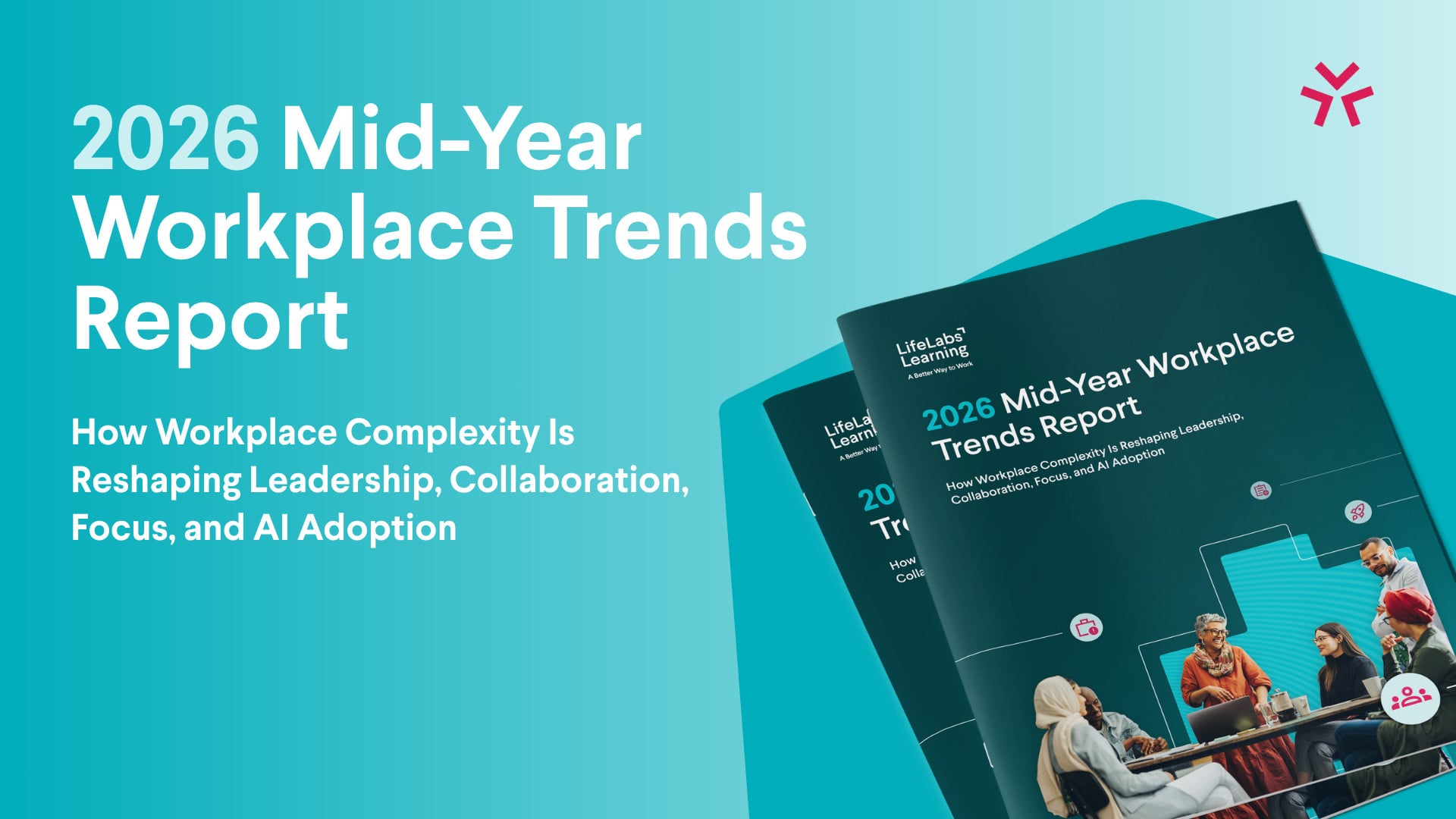
LifeLabs Learning’s inaugural 2026 Mid-Year Workplace Trends Report draws on anonymous input from more than 20,000 HR professionals, business leaders, and workshop participants.
Here’s what the findings mean for HR, People Ops and L&D leaders.
1. Manager effectiveness is under pressure
Managers help employees set priorities, develop skills, work through challenges, and make sense of change. Yet many organizations are concerned about their managers’ ability to meet those expectations.
56% of respondents rated manager coaching and feedback capability at 5 out of 10 or lower. Only 14% gave managers a rating between 8 and 10.
That points to a need for stronger leadership training programs, but capability is only part of the picture. Managers may know how to coach or give feedback and still struggle to make time for it.
One of the defining management trends of 2026 is a growing focus on the conditions surrounding manager performance. Organizations need to ask whether managers have realistic workloads, clear priorities, and protected time for people development.
What this means for leadership development
Manager development should connect to the moments managers encounter every week. That could include preparing for a 1-1 meeting, diagnosing what an employee needs before offering advice, or delegating work without losing accountability.
Organizations should also consider how leadership development is reinforced after a workshop. A manager may understand a new method during a session, but the real test arrives days later when a conversation becomes uncomfortable or priorities begin to compete.
2. Protecting focus is a leadership responsibility
When employees struggle to concentrate, leaders often respond with personal productivity advice. Those habits can help, but they can’t fix an environment shaped by constant interruptions and competing priorities.
41% of respondents said protecting focus was their biggest productivity challenge. Interruptions, reactive work, and competing priorities were making it harder to sustain attention.
This makes focus a leadership issue. Employees need managers who can clarify which work matters most, identify what can wait, and reduce unnecessary friction. Leaders also shape norms around response times, meetings, messages, and availability.
Focus is one of the future leadership skills
The ability to create clarity is becoming one of the most valuable future leadership skills. Leaders don’t need to remove all ambiguity, but they do need to help people make good decisions when priorities compete.
Leadership development should move beyond personal organization and help managers establish clearer working agreements, improve meetings, reduce interruptions, and make tradeoffs easier to understand.
3. Collaboration problems are often rooted in trust and clarity
Collaboration challenges are frequently described as communication problems. Sometimes they are. In other cases, communication is only the visible part of the issue.
Nearly half—48%—said workplace conflict was rooted in trust and capability concerns. The research also identified unclear expectations, inconsistent follow-through, and uncertainty about ownership.
A team may struggle because people don’t trust one another to complete the work. Employees may stay quiet because decision authority is unclear. Departments may duplicate effort because responsibilities were never defined.
Leadership strategies need to address the source of friction
Effective collaboration begins with diagnosing the source of the friction. Is information missing? Is ownership unclear? Has follow-through broken down? Do employees feel safe raising concerns? Leadership development can help managers answer those questions and address problems before frustration escalates.
These capabilities matter for professional development beyond management. Individual contributors also need the skills to clarify ownership, surface disagreements, and repair trust when work goes off track.
4. AI adoption is increasing the need for human judgment
AI is spreading through the workplace faster than many organizations are establishing norms around it.
58% of HR and People leaders described AI adoption as improvised. Only 14% said their organization’s approach was thoughtful and structured.
Managers are being asked to guide employees through AI transformation even when they may lack clear direction themselves. They need to help teams decide where AI is useful, how its output should be checked, and when human judgment should take priority.
They also need to lead through the uncertainty AI creates. Employees may wonder about changing roles, expectations, and career paths.
The future of leadership is not purely technical
Some of the most important future leadership skills are deeply human: exercising judgment, questioning assumptions, coaching critical thinking, and establishing accountability for AI-assisted work.
Leadership training programs can help managers turn scattered experimentation into shared practices. Employees need clear guidance on appropriate use, data boundaries, quality standards, and responsibility for final decisions.
How professional development is changing
The report also reveals a shift in how employees want to learn.
Across hundreds of workshops, LifeLabs facilitators observed greater cognitive load, more hesitation to participate, and stronger demand for learning that could be applied immediately.
When employees are already stretched, learning needs a clear connection to the work in front of them. They need opportunities to practice a skill, receive feedback, and adjust before using it in a higher-stakes situation.
For L&D leaders, the question is expanding from “Did employees attend?” to include “Can they use the skill when the moment arrives?”
What should HR and L&D leaders prioritize in 2026?
The leadership development trends shaping 2026 call for a closer connection between learning and work.
First, identify where performance is breaking down. The cause may be a skill gap, but it could also involve workload, role clarity, team habits, or inconsistent expectations.
Then, focus on a small set of shared behaviors connected to real business needs. This could be coaching more effectively, protecting focus, strengthening accountability, or guiding AI-enabled work.
Finally, reinforce those behaviors through continued practice and real-world application. Leadership development is most useful when it helps people apply it to the situations they already face.
Explore the research behind these trends in LifeLabs Learning’s 2026 Mid-Year Workplace Trends Report.
FAQs
What are the top leadership development trends in 2026?
The four key leadership development trends in 2026 are improving manager effectiveness, helping teams protect focus, strengthening trust and role clarity, and preparing leaders to guide responsible AI adoption. These priorities come from LifeLabs Learning’s 2026 Mid-Year Workplace Trends Report featuring proprietary research with more than 20,000 HR professionals, business leaders, and workshop participants.
Why is manager effectiveness a priority in 2026?
Managers face growing expectations to coach employees, give feedback, set priorities, support development, and lead through change. LifeLabs Learning’s research found that 56% of respondents rated manager coaching and feedback capability at 5 out of 10 or lower. Leadership development should build practical skills while also addressing workload, competing priorities, and the time managers need to support their teams.
How can leaders help employees protect focus?
Leaders can protect focus by clarifying priorities, reducing unnecessary meetings and interruptions, and setting shared expectations for response times and availability. LifeLabs Learning’s proprietary research found that 41% of respondents named protecting focus as their biggest productivity challenge. Focus improves when employees know what matters most, what can wait, and how to make tradeoffs.
What leadership skills improve trust and collaboration?
Leaders can improve trust and collaboration by clarifying ownership, setting consistent expectations, following through on commitments, and making it safer for employees to raise concerns. In the 2026 Mid-Year Workplace Trends Report, 48% of respondents said workplace conflict was rooted in trust and capability concerns. Strong collaboration starts with identifying the source of friction rather than treating every issue as a communication problem.
How is AI changing leadership development?
AI is increasing the need for human judgment, critical thinking, accountability, and change leadership. LifeLabs Learning’s research found that 58% of HR and People leaders described AI adoption as improvised, while only 14% said their organization had a thoughtful, structured approach. Leaders need practical guidance to help teams decide when to use AI, how to check its output, and when human judgment should take priority.