Summary: More employees are staying in their roles but not progressing in ways that feel meaningful. That creates a ripple effect: fewer open roles, limited opportunities, and teams that start to feel stuck. In this piece, we break down what’s behind the slowdown, from changing career goals to job hugging to everyday disengagement, and what helps. Mobility starts to move again when managers make growth clearer, more consistent, and easier to act on.
For many companies right now, talent mobility looks more like gridlock.
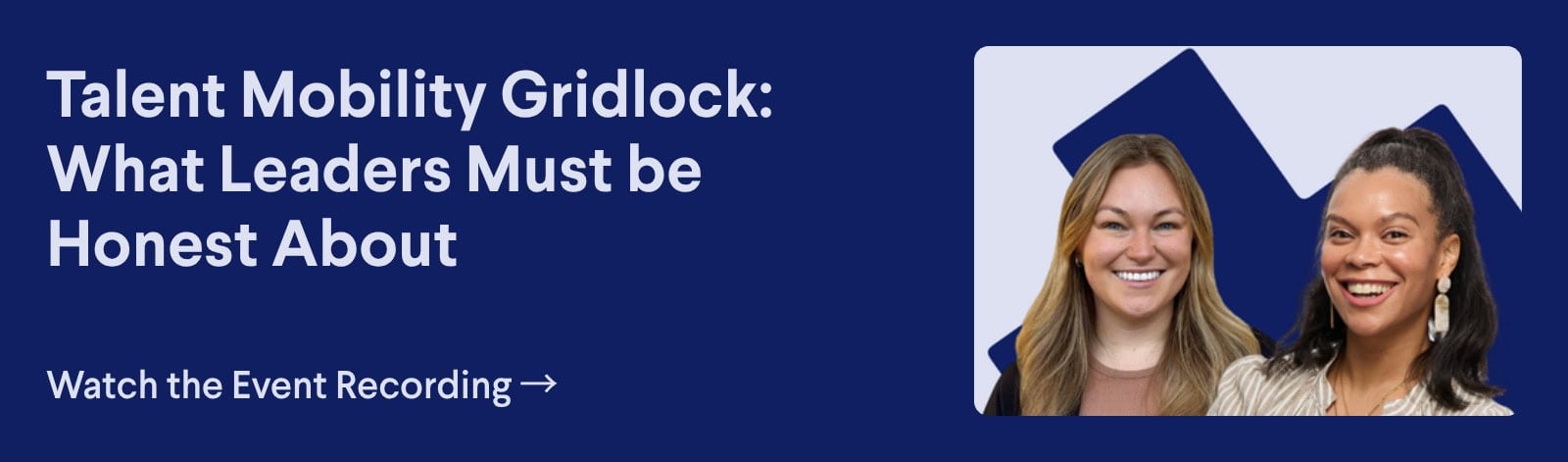
At our recent talent mobility event, Facilitator Manager, Dossier Harps, EdD, likened it to Atlanta traffic at 5 PM: “Everyone is trying to move but not going anywhere. It’s kind of like the workplace. You’ve got the ambition, you’ve got gas in the tank, but something is blocking you.”
This “talent jam,” as co-host Hannah Liss, Senior People Scientist at Culture Amp, described it, often stems from a perception that opportunities are limited, or from hesitation to take risks. Culture Amp’s most recent benchmark data shows external opportunities have slowed, and fewer employees are leaving their organizations than in recent years.
While retention may be up, engagement is moving in the opposite direction. As Hannah shared, “We’re seeing fewer employees feel energized by their work, fewer employees think their roles are using their strengths well, and fewer employees enjoy their work.”
More people are staying, but they’re not moving. Over time, that blocks growth opportunities for the people ready to step forward.
| What is talent mobility? Talent mobility is how employees move, grow, and develop within an organization through promotions, lateral moves, and skill-building opportunities. When it’s working, people can see a path forward. When it’s not, growth feels uncertain and movement slows. |
Why talent mobility is slowing down in organizations
Talent mobility can stall for structural or behavioral reasons. Flatter organizations with fewer roles are a real constraint right now. At the same time, shifting workforce expectations and habits are shaping how people move… or don’t.
Here are a few patterns showing up across teams:
Changing career goals
Ambition is taking a different shape. Employees still want growth and skill development, but not necessarily through traditional people-leadership paths.
Culture Amp reports seeing fewer employees interested in becoming managers, even as demand for growth remains high. This aligns with a Randstad study showing most employees consider themselves ambitious, yet a third (34%) don’t want to lead or manage others.
For many Millennial and Gen Z employees, growth is tied more closely to impact, flexibility, and work-life balance than to title changes. As Dossier put it, “Longer work hours or managing people may not be worth the trade-off, even with a salary increase or title change.”
The job hugging trend
Job hugging sounds harmless (we’re all for hugs), but it’s contributing to the slowdown. Instead of moving roles, more employees are choosing to stay put, often for stability or predictability. This isn’t entirely new, but it’s showing up more frequently.
Nearly half of employees report staying in their roles longer than they otherwise would, with many expecting to remain in place for the next two years. From the outside, this can look like retention. In practice, it limits movement and narrows opportunities for others.
Hannah explained, “From an HR perspective, job hugging isn’t a good thing. These are not positive signals of what would be present in a healthy labor market.”
A rise in micro-disengagements
Engagement challenges are well documented, but they rarely start in obvious ways. They tend to start with what we call micro-disengagements at LifeLabs. These are small shifts in how people behave at work, like a team member consistently arriving late or someone scrolling on their phone during meetings.
These moments are easy to overlook because work still gets done. But over time, they can change how people think about growth. Instead of pursuing new opportunities and putting in discretionary effort, employees fall back on doing the bare minimum. Left unaddressed, that shift hampers growth (and performance) across the team.
Culture Amp data shows about one in every five employees currently feels unfulfilled or stuck in their job.
What causes talent mobility to stall (and where it breaks down)
These patterns often trace back to a few underlying issues:
- Employees can’t see clear paths for growth
- Growth is defined too narrowly
- Managers avoid honest development conversations
- Opportunities feel limited or unevenly distributed
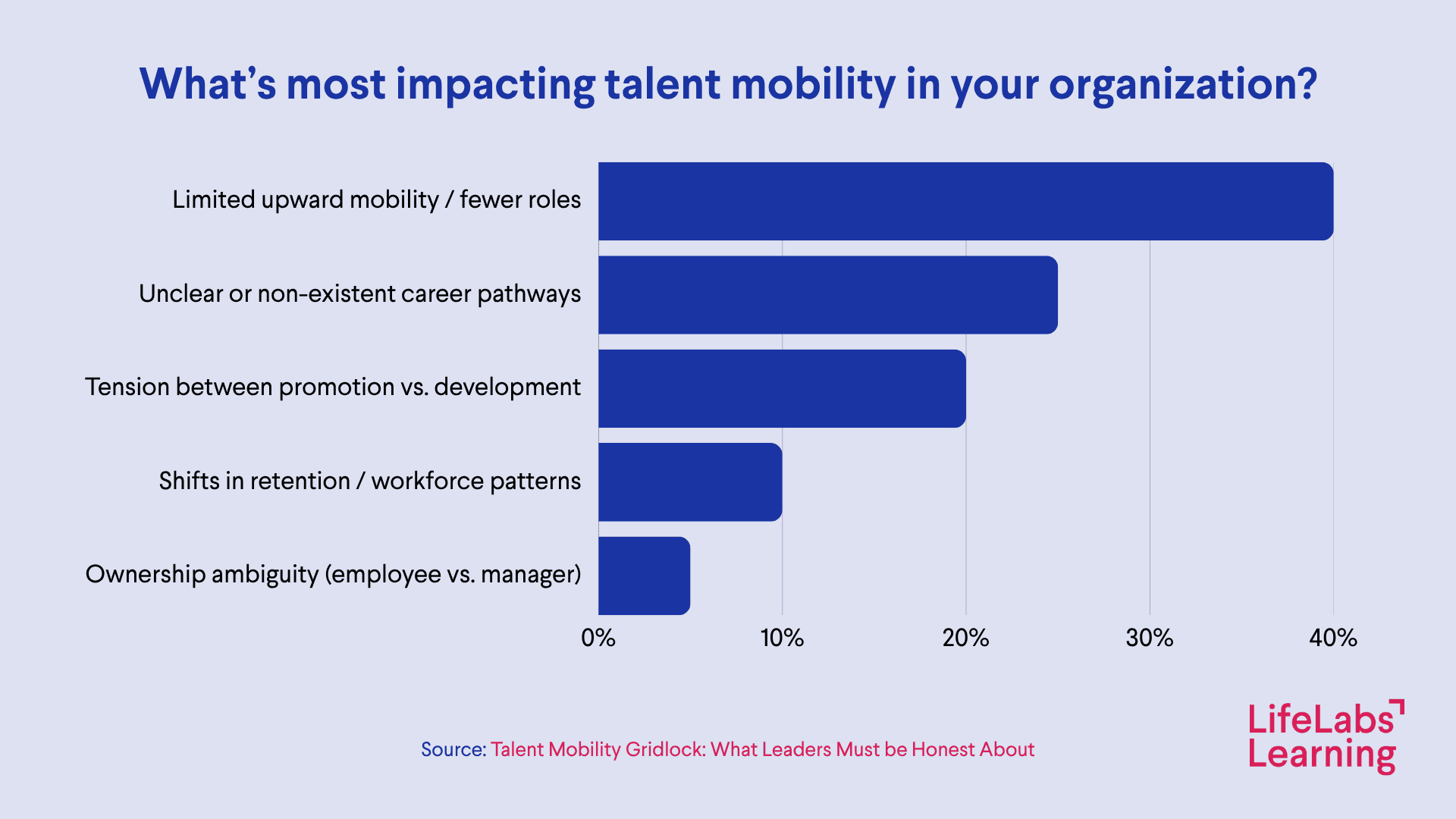
This lines up with what HR and People leaders say is getting in the way right now:
How to improve talent mobility and internal growth
If mobility has slowed, the fix isn’t a new system. You can help managers make growth easier to see, talk about, and act on consistently.
Here’s where to start.
1. Train managers to have honest career conversations
Growth conversations can be awkward and uncomfortable. It’s a lot easier to encourage employees than to give constructive feedback. Or to delay a discussion rather than to
say what may not be possible right now. But skirting those conversations creates confusion.
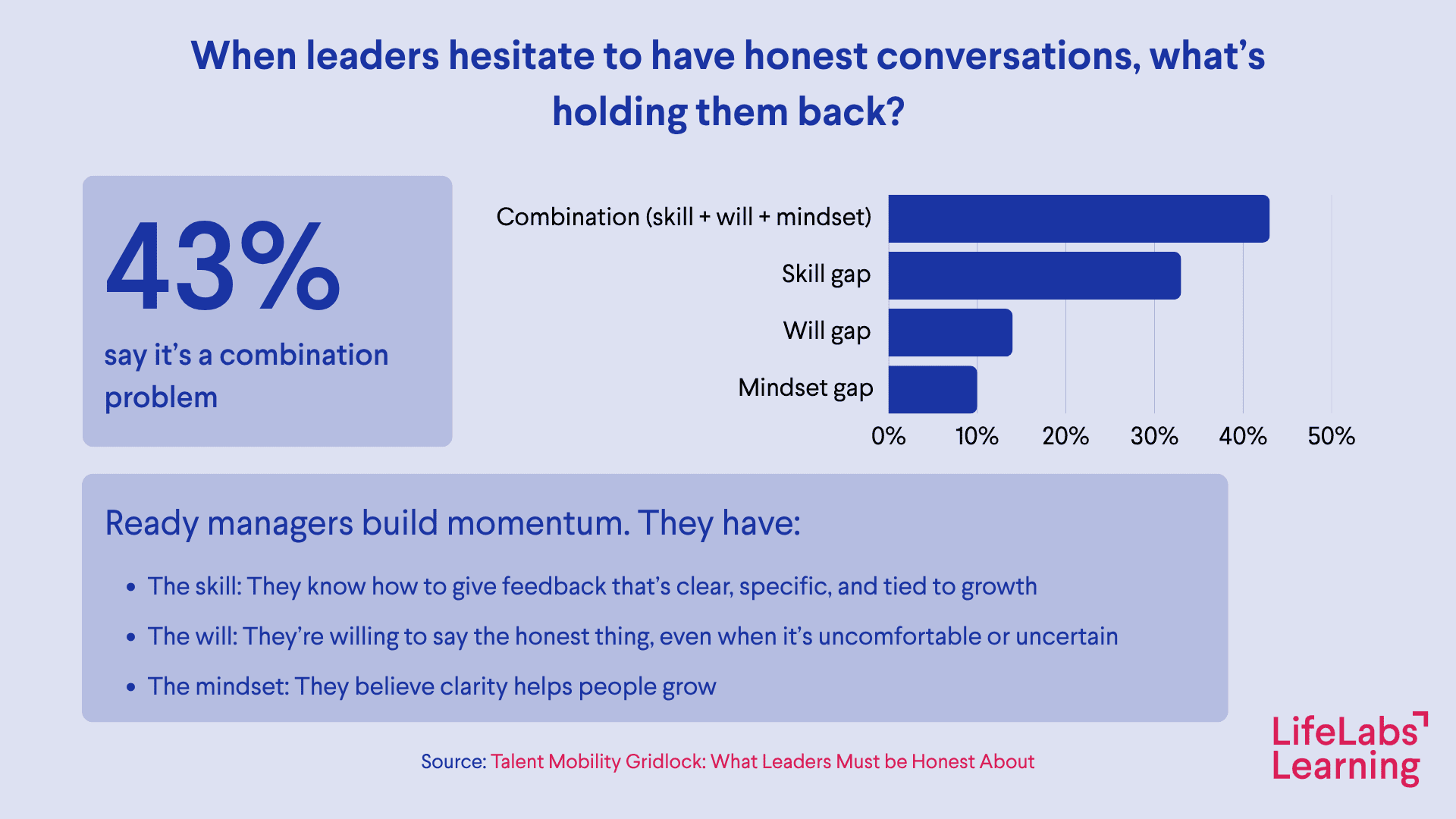
As Dossier shared, “A lot of the gridlock isn’t about clarity or setting expectations. It’s about honesty in leadership conversations and the courage to have them.”
She emphasized managers need the “skill, will, and mindset” to talk openly about readiness, development gaps, and tradeoffs.
2. Expand growth beyond promotions
The secret to keeping talent moving, especially in flatter organizations, is to think beyond the career ladder. Managers can offer tangible growth opportunities like stretch assignments, project rotations, mentorship programs, lateral skill-building, and cross-team collaborations, which give people something to move toward immediately.
Hannah also recommended asking employees what growth looks like to them and what types of opportunities they’re interested in, beyond the traditional individual contributor-to-people manager role.
3. Create clear and consistent career paths
Informal development can work for a while, but over time, it tends to favor the most visible employees. To keep growth accessible for everyone, you need to systemize it. Clarify what “ready” looks like, align on how progress is assessed, and create simple structures to help managers consistently support development.
Culture Amp research identifies development as a deciding factor in retention. When people can’t see how they’ll grow, they’re 40% more likely to leave.
4. Make development part of everyday conversations
Developmental feedback tends to live exclusively inside periodic performance reviews. The problem is, by the time leaders give that feedback, it’s disconnected from the work happening in the moment.
Instead, help managers make growth part of everyday conversations. Include it in one-on-one structures, coaching moments, and real-time feedback frameworks. Embed individual development plans into your systems. When managers consistently talk about development, not just deliverables, growth becomes a normal part of daily work.
How managers can unlock talent mobility through everyday conversation
Managers have more influence than they may realize. With fewer roles opening and more people staying put, the day-to-day decisions managers make — what they say, clarify, avoid — carry more weight.
There’s an opportunity to raise the bar on how growth works. To be more transparent about what’s possible, clearer about what readiness looks like, and more intentional about how people build skills, take on stretch work, and move forward.
Talent mobility starts moving again when people understand how to grow and trust that their managers will help them get there.
Start with your managers
Explore our manager training resource hub and Career Growth, Coaching, and Feedback manager training workshops. These resources and sessions focus on the everyday habits and conversations that shape growth, so development becomes something people can consistently see, act on, and move toward.
FAQ
What is talent mobility?
Talent mobility is how employees grow and move within an organization through promotions, lateral moves, and skill-building opportunities.
Why is talent mobility slowing down right now?
A mix of structural and behavioral shifts. Fewer roles are opening, employees are staying longer, and growth expectations have changed. At the same time, unclear career paths and inconsistent development conversations make it harder for people to move forward.
What is “job hugging”?
Job hugging is when employees stay in their roles longer than expected, often for stability. While it can look like retention, it reduces movement and limits opportunities across the organization.
What is micro-disengagement?
Micro-disengagement shows up as small shifts in behavior: less participation, less initiative, less energy. Over time, these moments add up and reduce motivation to pursue growth.
What actually improves talent mobility?
Clearer growth paths and better manager conversations. Organizations that see movement focus on helping managers talk openly about readiness, offer growth beyond promotions, and make development part of everyday work, not just performance reviews.
What role do managers play?
A significant one. Managers shape how clearly people understand their growth options and whether they feel supported to pursue them. When managers build the skill, will, and mindset for honest development conversations, mobility starts moving again.