
Summary: Performance reviews are shifting from correction to growth. The most effective organizations now use reviews to boost current performance and long-term career development. Employees want meaningful opportunities to learn and prepare for the future, while companies need agile skill growth to stay competitive. By integrating career development into reviews — through development data, reflective questions, and manager training — you create higher engagement, retention, and readiness for change.
An important paradigm shift is happening in the purpose and process of performance reviews. For a long time, the primary goal of performance assessment was correction. Set performance standards → measure past performance against those standards → correct (or reward) performance. In this sense, performance and professional development were seen as one and the same. The only development that was deemed relevant was closing gaps in current performance to achieve current goals.
Today, companies and employees are recognizing that this “performance = development” approach is letting us all down.
For starters, employees crave ongoing growth and learning beyond the confines of their present-day tasks. A complete 94% of employees say they would stay longer at a company that invests in their career development—a powerful indicator that opportunities for ongoing growth are critical retention drivers.
What’s more, companies today change and grow so rapidly that it’s not enough for employees to merely have the skills needed today. Agile organizations also help employees develop the skills they might need for the future of work.
But divorcing performance from development entirely doesn’t help either.
When present-day performance and overall development are entirely separated in an effort to give employees the perception of ongoing learning, the result isn’t nearly as effective. When performance expectations and development opportunities are disconnected, employees invest time developing skills that aren’t highly valued at their companies, while companies suffer from urgent skill gaps. Ultimately, this approach creates inefficiency and frustration all around.
Why should performance reviews focus on both performance and development?
The most successful and nimble organizations now take a “performance + development” approach. These companies create systems to ensure that employees are supported in achieving high performance today while also developing high-leverage skills for the future.
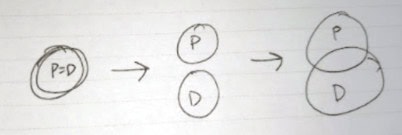
At LifeLabs Learning, we refer to high leverage skills as the skills that lie at the intersection of capabilities that companies need now and in the future, plus the skills that employees find personally rewarding and motivating to attain.
How can you integrate career development into your performance reviews?
While there are other ways to bring the performance + development approach to life, one of the easiest (and most underused) levers most companies have is their performance review system. Here are simple but powerful ways to integrate development support into your review process:
Gather development data
Make sure your performance reviews are designed to provide employees with data they can use to identify development opportunities.
For example: Rather than rating performance or focusing only on outputs (such as goals), give employees an opportunity to comment on inputs as well (such as specific behaviors and their impact). This way, employees and the managers who support them can more easily identify skill strengths and gaps.
Nudge development conversations
Set the expectation that a development conversation should always follow a performance assessment conversation.
For example: Add reflection prompts to your performance review template such as:
- “What skills or knowledge might help you close this gap (or stretch yourself even further)?”
- “What skills or knowledge have helped you achieve X result?”
How can leaders bring career development into review conversations?
While the design of your performance review process alone can catalyze the performance + development approach, another powerful lever most People Ops People have is their company’s leaders (including managers and executives). When we set up these folks for success, they become key drivers of turning every review into an opportunity for growth and investment in the future.
Here’s how you can support your company’s leaders in weaving development into reviews:
1. Train leaders to ask development questions
Every formal and informal review can become a development conversation with the right coaching questions. Train managers and execs to ask at least a few development questions. For example:
- What does “career growth” mean to you? What’s most important to you about it?
- What skill helped you achieve that result? How might you build it even further?
- What’s one thing you learned from this past month/quarter? How can you apply it?
Bonus: check out this video of a short career coaching conversation in action.
2. Train leaders to give high-quality feedback
Hearing that you’re underperforming can be scary, confusing, or demotivating, which hurts both performance and development goals. Give your people leaders the tools and skills they need to deliver feedback in a way that’s inspiring, supportive, and actionable. You can do this through workshops, easy-to-access templates, 1-1 support, and/or holding office hours.
Bonus: Pass on the LifeLabs Learning Feedback Prep Grid.
3. Share a skill list
Even when feedback is clear and gaps or strengths are apparent, it can be tricky to identify the specific skill someone is using (or lacking). Help make development conversations easier by co-creating and sharing a list of high-leverage skills. Some of the most important skills we see across the companies we work with include:
- Feedback skills
- Prioritization skills
- Strategic thinking
- Facilitating meetings
- Leading change
- Inclusion skills
- Influence without authority
- Delivery skills / public speaking
- Interviewing skills
- Adaptivity and resilience
For best results, go one step further by sharing resources or ideas for developing in these areas. For example: workshops, videos, articles, books, podcasts, or internal subject matter experts.
In short, it’s time for companies to evolve beyond a performance = development into a performance + development paradigm. Performance reviews are an excellent vehicle to drive this essential virtuous cycle. Not only will this approach lead to high engagement, it will also result in actual higher performance.
Performance Review Playbook
For more performance-related tools and templates, download our free Performance Review Playbook now.
Frequently Asked Questions
Why should performance reviews include career development?
Because employees want more than corrective feedback. Integrating development increases engagement, retention, and readiness for future challenges.
What are examples of high-leverage skills to focus on?
Skills like feedback, prioritization, strategic thinking, leading change, public speaking, and adaptivity are highly valued across industries.
How can managers make reviews more development-focused?
They can ask career questions, give clear and inspiring feedback, and provide resources like skill lists or coaching templates.
What happens if performance and development are separated?
Employees may build skills that aren’t valued internally, while companies struggle with urgent gaps. This leads to frustration, inefficiency, and lower performance.
How does LifeLabs Learning support this shift?
We train managers and executives to embed career development into reviews using science-backed tools, workshops, and coaching.
