Summary: Many organizations invest heavily in AI tools, only to find that adoption stalls and impact falls short of expectations. Based on recent LifeLabs Learning conversations with Will Feng of Fabletics and Dr. Kim Cameron, this article explores why AI initiatives struggle when leadership behaviors don’t change alongside technology, and what leaders, managers, and HR teams can do to make AI adoption actually stick.

In recent conversations with Will Feng, Global Head of Learning & Leadership Development at Fabletics, including a Leader Lab podcast episode and a live event, the same tension surfaced: AI is advancing quickly, teams are experimenting, and leadership habits aren’t always keeping pace.
Will named what he was seeing inside his organization:
“AI is not a technology challenge. It’s a people, culture, and creativity challenge.”
As AI becomes part of everyday work, that framing becomes harder to ignore. Many AI initiatives stall because organizations don’t change how leaders and teams behave in response to the technology.
The real reason AI adoption breaks down
In many organizations, AI adoption starts with a genuine interest. New tools are introduced, early adopters explore them, and small improvements begin to show up in daily work. Over time, though, differences emerge. Some teams integrate AI into their operations, while others use it inconsistently or stop altogether. Often, progress fragments, confidence varies, and shared norms never fully form.
In our conversations, Will described this as a change-leadership gap. Organizations invest heavily in AI tools, but spend far less time helping people understand what the change actually means for how they work.
Leading through the cultural risk of AI change
Around the same time we spoke to Will, we hosted a LifeLabs Learning event with Dr. Kim Cameron, Professor Emeritus at the University of Michigan and creator of the most widely used culture assessment in the world, the Organizational Culture Assessment Instrument. The conversation surfaced a risk leaders often underestimate during AI adoption: cultural deterioration.
Drawing on decades of research, Dr. Kim explained that in times of uncertainty, people tend to become more cautious and conservative in how they work. They look to leaders for cues about what matters and what risks are acceptable. When leaders respond with rigidity and control, like adding rules, limiting experimentation, or overcorrecting in the name of safety, performance and morale tend to suffer. His research shows that fear-driven environments consistently underperform, even when systems and processes are sound.
Instead, what enables organizations to adapt is a different set of signals. These include transparency about what’s known and unknown, flexibility in how teams experiment and learn, and trust in people’s ability to apply judgment. Over time, these signals determine whether AI becomes a source of innovation or a quiet drain on performance and engagement.
Why Managers Make or Break AI Initiatives
In our conversations, Will described AI adoption as a parallel effort: organizations roll out new tools, and managers help people learn to use them effectively. Both matter, and they need to happen together.
The manager’s role becomes even more important as AI embeds into everyday workflows. While AI can support managers by augmenting parts of the work, helping with planning, coordination, or information processing, it doesn’t replace the human responsibilities of leading a team. Managers are still the ones motivating people, helping them grow, and setting the conditions for trust. They help teams make sense of where AI fits, when to rely on it, and when human judgment needs to take the lead.
What HR Leaders Can Do Right Now
For HR and People leaders, impact comes from shaping the conditions that influence how people use AI tools day-to-day.
That starts with clarity. HR can help define what responsible experimentation looks like, where judgment is required, and how learning gets shared across teams.
Next is manager enablement. Organizations are asking managers to coach through ambiguity while learning AI themselves. HR plays a critical role in building their confidence through manager training, peer learning, and visible leadership modeling.
Finally, HR can protect psychological safety during AI change. Anxiety is inevitable during periods of uncertainty. What matters is whether curiosity is encouraged, questions are welcomed, and missteps are treated as part of learning rather than signals to retreat.
This is the kind of leadership behavior change LifeLabs Learning helps organizations build, so AI investments translate into progress rather than stalled pilots.
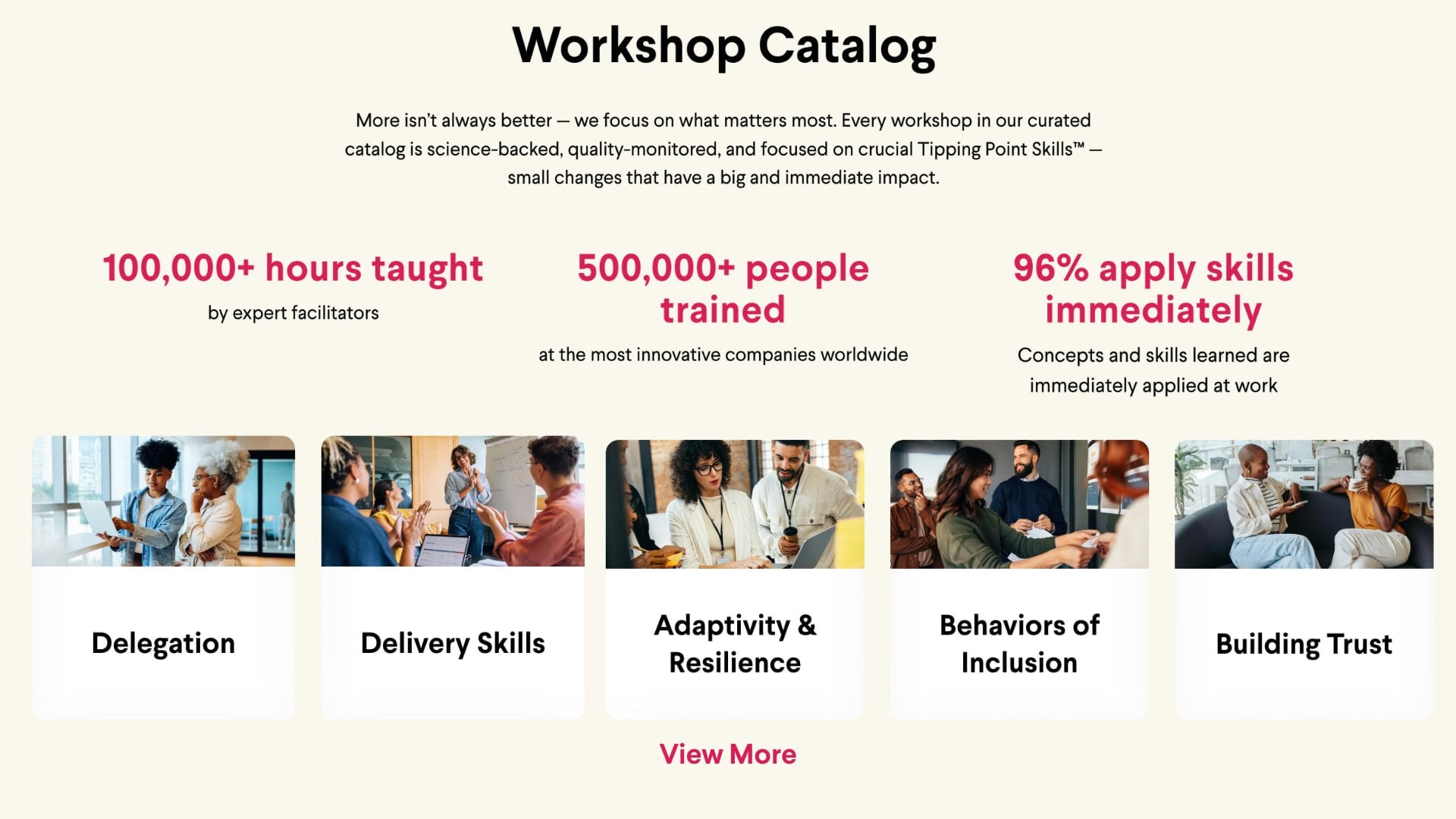
Explore our Workshop Catalogto see how LifeLabs Learning helps organizations build the people skills that make AI initiatives stick.
FAQs: Making AI Initiatives Succeed
Why do so many AI initiatives fail after early excitement?
Most AI initiatives lose momentum because organizations introduce new tools without changing how leaders and teams work together. Early experimentation occurs, but without shared expectations, managerial guidance, and psychological safety, usage becomes inconsistent, and learning stays siloed.
Is AI adoption primarily a technology challenge or a leadership challenge?
AI adoption is primarily a leadership and behavior challenge. The technology often functions as intended, but without changes in how leaders set norms, model judgment, and support learning, teams struggle to integrate AI into real work.
What role do managers play in successful AI adoption?
Managers shape how AI actually shows up day to day. Their behavior — how they talk about AI, apply judgment to outputs, and respond to mistakes — signals whether teams should experiment thoughtfully or avoid the tools altogether.
How can leaders reduce fear and hesitation around AI?
Leaders reduce fear by acknowledging uncertainty, setting clear expectations, and learning alongside their teams. When leaders model curiosity instead of certainty, people are more willing to experiment and share what they’re learning.
Why doesn’t AI training alone lead to lasting adoption?
Training builds awareness, but adoption depends on behavior. Without ongoing reinforcement through manager habits, team norms, and shared learning, people revert to familiar ways of working once training ends.
What’s the most effective first step to improve AI implementation?
The most effective first step is investing in manager capability. Organizations that equip managers to guide learning, apply judgment, and set expectations see more durable AI adoption than those that focus only on tools or policies.