Summary: A conversation with LifeLabs Learning facilitator Michelle King about the meeting habit that helps people understand why they’re there and what needs to happen next.
Most meeting problems start before the meeting itself even begins. Someone sends a calendar invite with a vague title. No one knows whether the group needs to make a decision or share an update. People arrive with different expectations, then spend the first ten minutes trying to work out what the meeting is for.
LifeLabs Learning Facilitator Manager Michelle King has seen this from all sides. She’s led meetings for global teams, spent weeks with her calendar packed with meetings, and taught meeting skills to managers across a wide range of organizations.
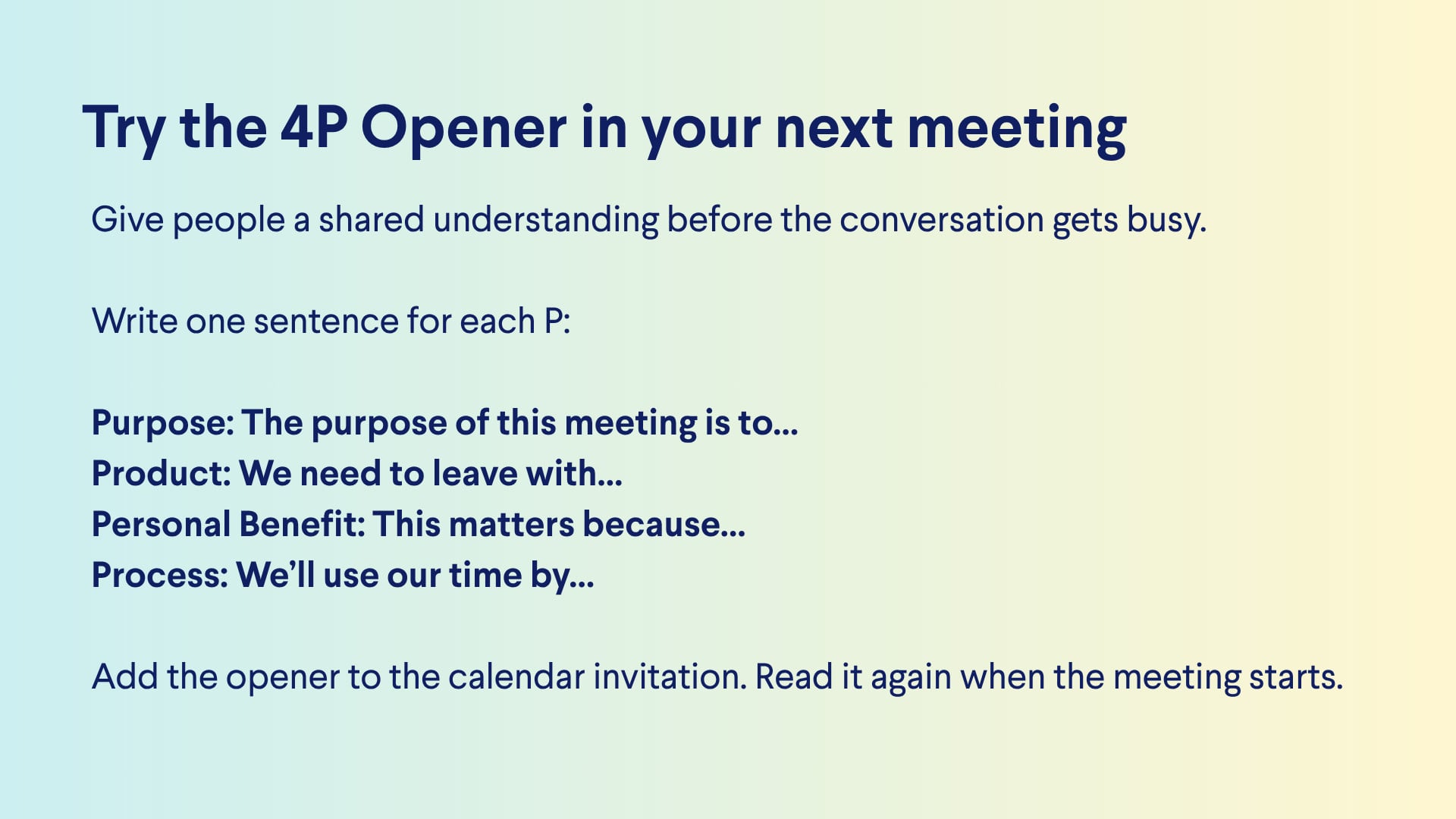
Her advice for more effective meetings is to open with the 4Ps. The 4P Opener helps the meeting owner explain the Purpose, Product, Personal Benefit, and Process before the group gets into the work.
We spoke with Michelle about how to use it, where AI fits, and what to do when someone else’s meeting starts drifting.
Q: Why do so many meetings feel unproductive?
Michelle: A lot of people walk into meetings without knowing why they were invited. I’ve done that. I’ve looked at an invite and thought, “Am I supposed to contribute something? Is there a decision we’re making? Do I need to prepare?”
When that information is missing, people have to figure it out in real time. That takes up part of the meeting. It also makes it harder for people to participate well.
Q: How can you tell whether a meeting could be an email?
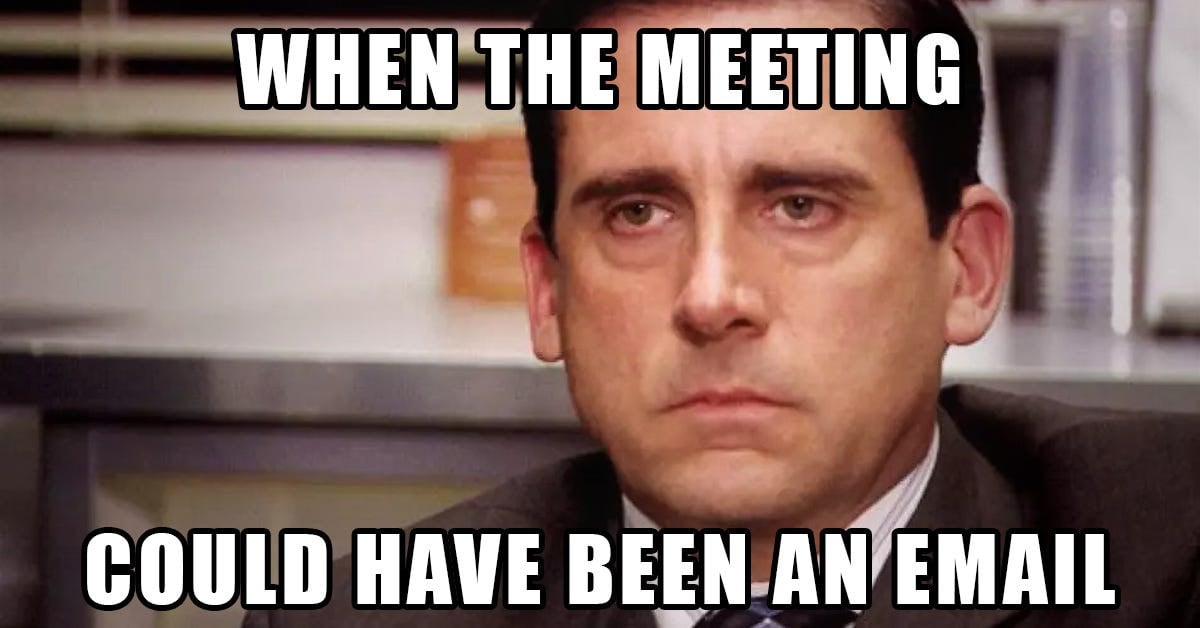
Michelle: We’ve all seen the memes where it’s like “that could have been an email.” So when you’re thinking about whether your meeting could actually be an email, think about what you need from other people.
A live meeting makes sense when the group needs to discuss something together. You might need input from people who see the situation differently. Maybe there’s a decision that requires conversation. On the other hand, a straightforward update can often be an email, Slack message, shared document, or recorded video.
I would ask, “What needs to happen by the end of this conversation?” If the answer is only “Everyone needs to hear this information,” you may not need the meeting.
Q: What is the 4P Opener?
Michelle: The 4P opener is a framework we teach at LifeLabs to be used as an opening statement that helps everyone understand the meeting before the work begins.
The first P is for Purpose. Why are we meeting?
The second is Product. What do we need to leave with?
Then there’s Personal Benefit. Why does this matter to the people who are attending?
The last P is Process. How are we going to spend the time?
You can say all of that in under a minute. Once people hear it, they know where the meeting is going.
Q: How are Purpose and Product different?
Michelle: Purpose explains why the meeting exists. Product explains what we need to have when it ends. Let’s say an HR team is reviewing a new AI policy.
The Purpose might be: “We’re meeting to review how employees can use generative AI with company information.” And the Product might be: “We need to leave with an agreed list of what employees can enter into approved tools.”
One gives the reason for meeting. The other gives the group a finish line. When the Product is unclear, people can have an interesting conversation without completing the work.
Q: What makes Personal Benefit so important?
Michelle: People need to know why their involvement matters. The benefit doesn’t have to be something they gain individually. It might help their team avoid repeated work. It could help customers get more consistent answers.
In the AI policy example, you might say, “This will help managers answer employee questions without guessing.” That sentence helps each person understand why they’ve been asked to join.
It can also show you that someone doesn’t need to attend. Sometimes people get invited out of habit or courtesy. The Personal Benefit helps the meeting owner check whether the guest list makes sense.
Q: What does Process add?
Michelle: Process tells people what the experience will look like. You could say, “We’ll review the current draft for ten minutes. Then we’ll discuss the sections where we still disagree. We’ll use the final fifteen minutes to confirm changes and assign an owner.” Now people know when their input is needed. They can also tell whether the agenda fits the time available.
I like to end the opener by asking, “Sound good, or is there anything we need to add?” That gives the group a chance to correct a mismatch early. Someone may have arrived expecting a topic that isn’t on the agenda. You can decide whether to add it, park it, or schedule a separate conversation.
Q: Could you give us a full example?
Michelle: Here’s one for a team deciding whether to use an AI note-taking tool:
“The purpose of today’s meeting is to decide whether we want to test an AI note-taker in our weekly team meetings. We need to leave with a decision on the pilot and any boundaries for using it. This will help us reduce time spent cleaning up notes while making sure people know when a conversation is being recorded or summarized. We’ll review the proposed tool, hear concerns, then decide whether to run a four-week test. Sound good, or is there anything we need to add?”
You’ve told people what the conversation is for. They know what decision is coming. They also know that privacy concerns belong in the discussion.
Q: Can AI make meetings better?
Michelle: AI note-takers can save time. They can produce a summary and pull out possible action items. That’s useful when the alternative is asking one person to take notes every week.
The meeting owner still has work to do, though. You need to tell people the tool is present. Someone should review the summary because it may miss context or assign the wrong meaning to a comment. You also need an agreement about what information belongs in the recording.
Q: What can someone do when they’re attending a meeting and there is no clear opener?
Michelle: Ask a grounding question, like, “What’s the goal for today?” That’s a simple way to get clarity without criticizing the person who called the meeting. You might also ask, “What do we need to leave with?” That helps when the group is discussing a topic but hasn’t agreed on an outcome. I know it can feel uncomfortable when a senior leader is running the meeting. A calm question often helps everyone in the room because other people are wondering the same thing.
Q: How should a facilitator respond when the meeting goes off track?
Michelle: Acknowledge the point before redirecting. You could say, “That’s important, and I want to make sure we have enough time for it. Can we put it in the parking lot and decide at the end whether it needs a separate conversation?” People need to feel heard, and the meeting still needs to move on.
Q: Where should an HR or People Ops team start if meetings have become a company-wide problem?
Michelle: Give people one shared practice and let them use it right away. The 4P Opener works because it applies to a team meeting, project kickoff, one-on-one, or decision session. People don’t need a new platform or a complicated process.
Ask managers to put the 4Ps in their next meeting invite. Then have them read the opener at the start. After the meeting, they can ask the group one question: “Did you know why you were here and what we needed to accomplish?” That gives the manager useful feedback and keeps the experiment small enough to repeat.
LifeLabs Learning’s Effective Meetings workshop gives managers and teams time to practice meeting openers, choose structures that fit the work, and redirect discussions without dismissing people. Participants leave with tools they can use in their next calendar invite.
Help your teams spend less time wondering why they’re in the room. Explore the Effective Meetings workshop.