
Summary: Ethical AI in HR is essential. With 81% of HR leaders already integrating AI into their teams, understanding when, where, and how to use it responsibly is critical. In this blog, we share actionable strategies, from legal safeguards to fairness checks, to help you implement AI effectively in HR while honoring your organization’s values. Plus: a clear FAQ to guide your next steps.

Artificial Intelligence is transforming Human Resources quickly, with 81% of HR leaders already paving the way by integrating AI into their processes. By exploring thoughtful AI adoption, you’re joining a forward-thinking group committed to both technological advancement and an approach that aligns with the ethical and operational values of your organization, industry, and clients.
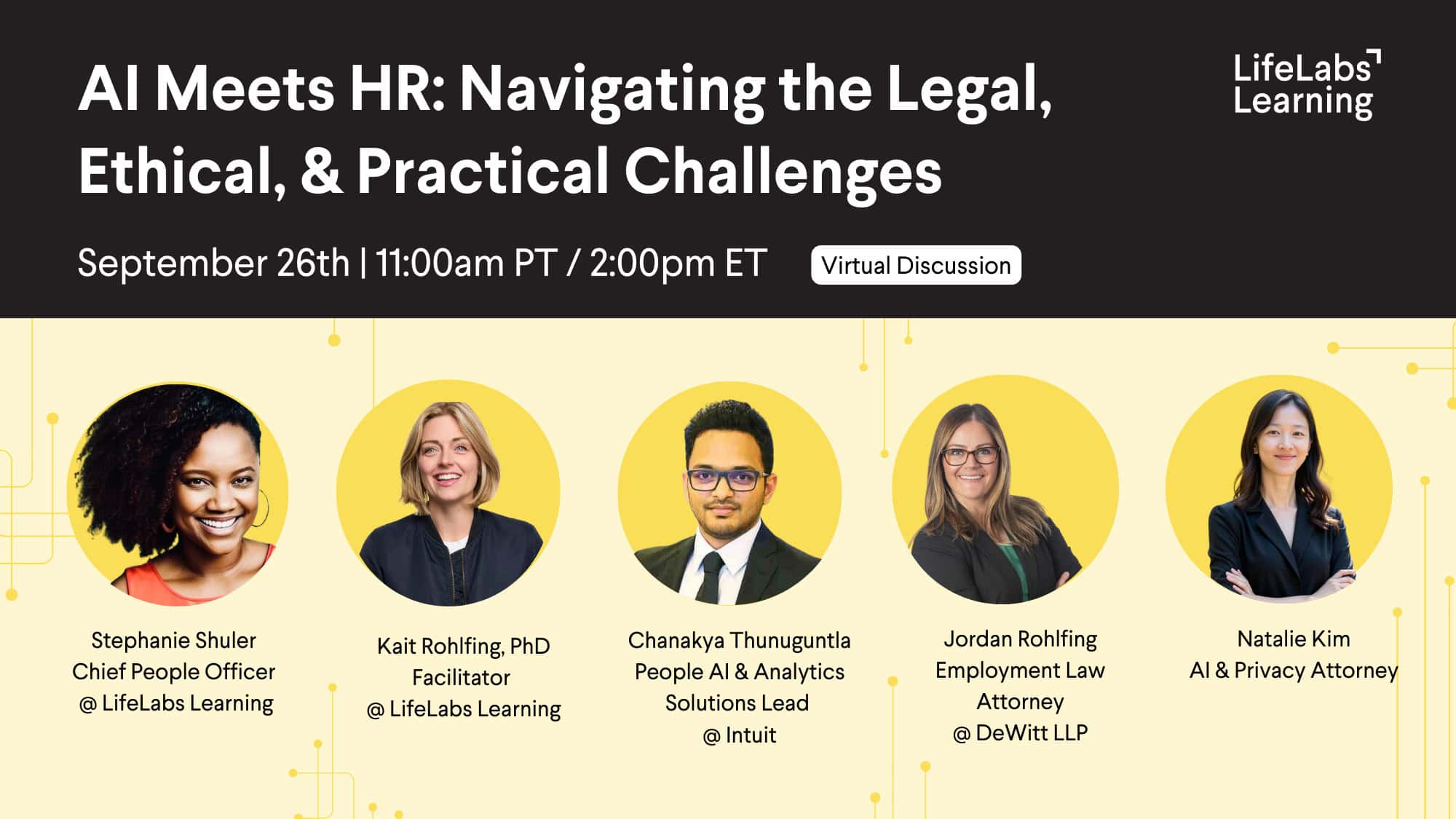
To help navigate these complexities, our AI Meets HR webinar explored the legal and ethical aspects of AI integration, including protecting sensitive data, staying on the right side of compliance, and ensuring fairness. Below, we’ve summarized our panelists’ top insights to guide you in harnessing AI’s potential safely and responsibly.
Why AI in HR?
AI offers significant benefits across HR and can drive meaningful change in the industry. Three essential factors have amplified AI’s impact, according to Chanakya Thunuguntla, People AI & Analytics Lead at Intuit:
1. Technology advancements – AI has grown from basic machine learning forecasting for predicting employee behaviors to large language models ready to handle more nuanced HR tasks, like:
- Talent Acquisition – Streamline recruitment by matching candidates quickly.
- Employee Support – Boost efficiency in managing employee queries.
- Talent Development – Personalize training and provide data-driven insights.
- Performance Management – Enhance systems such as employee feedback and goal tracking.
2. Necessity – Competitive, fast-paced job markets mean HR teams need to be just as agile and efficient in order to attract and retain top talent. AI tools can streamline slow-moving sections of the sourcing, screening, and hiring process.
3. Opportunity – Traditional data structures (like tables) fall short in capturing employee behavior, leaving 80-90% of information unstructured. AI enables HR to analyze unstructured data, like feedback, for a fuller picture of employee needs.
AI use cases in HR continue to grow, providing forward-looking leaders with new tools to elevate the employee experience. Emerging trends include AI agents that streamline hiring through automated job postings, candidate identification, and initial interviews. Additionally, real-time analysis of employee communications provides instant insights into engagement and sentiment and flags potential issues, like burnout or flight risk.
Legal considerations: compliance, bias, and privacy
Leading organizations don’t just adopt AI; they set the bar by proactively addressing privacy, fairness, and compliance. With the right approach, AI becomes an asset that enhances organizational values and supports a positive, inclusive workplace. The following insights from Jordan Rohlfing, an employment law attorney at DeWitt LLP, and Natalie Kim, an AI & privacy attorney, offer guidance to help protect and strengthen your organization.
Compliance with laws and regulations
Compliance with jurisdiction-specific regulations is critical. Jurisdictions like New York City have implemented laws requiring employers to notify applicants and employees when they use AI in decision-making. These laws may also mandate audits to ensure AI tools are free from discrimination or bias, particularly when making hiring or other employee-related decisions. Stay informed about these legal requirements and adjust your processes accordingly.
Discrimination and bias control
The potential for embedded discrimination or bias in AI algorithms is a significant risk. Carefully scrutinize AI tools to ensure they don’t discriminate based on protected characteristics like race, sex, or religion. Be vigilant about identifying any biases within AI systems with regular audits and testing.
Vendor contracts and insurance protections
Review contracts with AI vendors to ensure they include necessary protections, especially around issues like data security and liability. Additionally, be certain you have appropriate insurance coverage to protect your company in case of discrimination claims from using AI. Work closely with legal teams to ensure your vendor contracts and insurance policies are structured to mitigate potential AI-related risks.
Privacy protection
Follow privacy best practices throughout the AI lifecycle (data collection, processing, retention, and deletion) and minimize personally identifiable information (PII). Conduct a thorough impact assessment before deploying AI to discover potential privacy risks and ensure compliance with global regulations, such as the EU Artificial Intelligence Act, which classifies HR AI as high-risk. Key privacy measures include transparency, human oversight, and clear explanations of AI decisions.
Ethical considerations: privacy and discrimination
AI’s ethical implications are an important focus for HR leaders who want to leverage technology responsibly and inclusively. By addressing these considerations, you ensure AI streamlines processes while also aligning with core organizational values and strengthening trust with employees. The following insights from Stephanie Shuler, CPO at LifeLabs Learning, will help you navigate AI’s ethical landscape, building a positive, respectful workplace that benefits both the organization and its people.
Employee monitoring
AI tools often involve monitoring employee behaviors, which can raise concerns about surveillance and data misuse. You should only use AI tools for retention and engagement, not for excessive monitoring or to push employees out. Transparency is critical: clearly inform employees about how you use AI and provide them with the option to opt in or out.
Discrimination and sensitive data
AI systems, especially those utilizing natural language processing or video screenings, can unintentionally reinforce biases in hiring and performance reviews. AI may struggle to understand diverse speech patterns or body language, which can disadvantage neurodiverse individuals or those who are hard of hearing. Additionally, AI’s handling of sensitive data, like disability status, must be done carefully to avoid harm. Create inclusive AI systems and audit them regularly.
Promoting fairness in AI implementation
Fairness in AI-driven HR practices is essential for creating an inclusive and trustworthy workplace. By designing and monitoring AI thoughtfully, leaders can mitigate bias and promote equity, ensuring that AI serves all employees fairly. Chanakya Thunuguntla, People AI & Analytics Lead at Intuit, shares strategies to help make fairness a foundational part of your AI approach.
Human intervention at key points
AI should support, not replace, human decision-making. For example, some organizations have implemented AI tools for performance feedback but with built-in safeguards. The AI can help generate feedback based on input data, but cannot submit it without the manager’s review and adjustments. This gives the manager the final say, promoting fairness while benefiting from AI efficiency.
Diverse design teams
Better identify and mitigate biases baked into the system by involving individuals from varied backgrounds in the development process. This inclusive approach ensures AI solutions cater to a wide range of employee needs and reflect diverse perspectives.
Representative data
AI systems are only as good as the data on which they’re trained. The data fed into AI algorithms must represent all employee groups to promote fairness. This means carefully curating datasets that reflect diversity in gender, ethnicity, experience, and other relevant factors. Doing so ensures your AI solutions operate fairly across all populations, avoiding the risk of reinforcing existing biases.
| How to vet AI xendors ▶️ Direct Vendor Engagement: Ask about bias prevention steps, audit history, testing, and any litigation involving their tools to assess potential legal risks upfront. See our list of suggested vendor questions in the AI for HR Playbook. ▶️ Independent Audits: Conduct audits annually to check for biases, as required in some regions like NYC. Adjust or replace tools as needed. ▶️ Contract Negotiation: Ensure contracts with AI vendors include liability limitations to protect your company. ▶️ Insurance Review: Confirm that your Employment Practices Liability Insurance covers AI-related claims to avoid unexpected liabilities. |
A strategic blend of technology and expertise
If you’re already exploring AI in HR, congratulations! You’re embracing the future and leading the way in a rapidly evolving field. Thoughtful implementation ensures you’re both integrating cutting-edge technology and aligning with the ethical and operational standards that make your organization and your teams thrive. Success comes from blending AI’s potential with the human touch to confidently and thoughtfully navigate its opportunities.
Want more? Download our AI for HR Playbook
Watch ‘AI Meets HR: Navigating the Legal, Ethical, & Practical Challenges’ On Demand!
Watch Now
FAQs:
What regulations impact AI in HR today?
Some regions (e.g., NYC) require notification and bias audits when AI assists hiring. The EU’s AI Act will also classify HR AI as “high-risk.” Can your company meet those standards?
How often should we audit AI for bias?
At least annually—sooner if your tool is high-stakes (like hiring or promotion). Automate basic bias detection but always include human review.
How do I manage vendor risk?
Ensure vendor contracts include audit rights, liability exposure, data security, and compliance with specific laws. Double-check your insurance covers AI-related claims.
How do I balance AI and human decision-making?
Use a human-in-the-loop model. AI offers insights—but every final decision, from hiring to layoffs, should be reviewed through a human values lens.
