

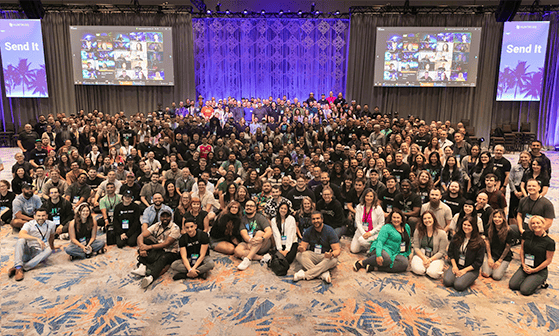
Company: Huntress
Function: Software & Services
Industry: Cybersecurity
Fun Facts:
- Founded by cyber operators: Huntress was founded in 2015 by former U.S. National Security Agency (NSA) cyber operatives.
- Recognized remote culture: Huntress was named one of Built In’s Best Remote Places to Work (2025) and one of Inc. Magazine’s Best Workplaces (2 years running), reflecting its people-first, fully remote culture.
- Community-driven learning: The Huntress annual Capture the Flag event brings together ethical hackers and learners for skill building, collaboration, and friendly competition.
TL;DR:
- Huntress partnered with LifeLabs Learning to build a shared, skills-based approach to management amid rapid growth.
- Within four months, key manager effectiveness scores increased by up to 15 points, with the most substantial gains in goal clarity, coaching, and feedback.
- Median one-on-one completion exceeded 90%, signaling strong adoption of consistent management practices.
- Repeated practice and embedded systems helped turn new skills into everyday habits, shaping Huntress’s manager path and succession planning.
Situation
With Huntress scaling rapidly, its leadership team knew maintaining clarity, alignment, and a strong culture while adding a growing number of new managers was critical to future success. As a cybersecurity company that protects businesses and the managed service providers who support them, Huntress needed managers who could lead effectively in a fast-paced environment.
The company had already made a deliberate shift away from traditional quarterly performance reviews toward recurring one-on-ones, with a minimum of once per month (best practice: weekly). But it was more than removing an old process; it was about creating a shared language, tools, cultural habits, and shifting from managing to coaching teammates to ensure alignment towards achieving common goals.
Adding to the challenge, many Huntress managers come from highly technical backgrounds, where success is traditionally measured by individual expertise and speed of execution. For some of these leaders, carving out time for structured coaching conversations and viewing management as a skill to practice could feel unfamiliar and, at times, secondary to “getting the work done.”
For this fully remote global company, the stakes are high. Without clear expectations and goal-setting, Huntress risked misaligned priorities, slower execution on key initiatives, and the erosion of a culture grounded in radical candor and belonging. So the team set out to:
- Create a shared standard for high-quality, fully-aligned one-on-ones
- Develop a common language for delivering feedback and having developmental conversations.
Solution
A skills and reality-based approach
Huntress’s partnership with LifeLabs Learning began with the Manager Core program, giving managers a repeatable, skills-based approach to leadership they could use in monthly one-on-ones, and beyond. The company rolled out Manager Core 1 to cohorts of current and aspiring managers, followed by executives. This foundational work was followed by Manager Core 2, focused on strengthening people development and strategic thinking.
To broaden access, Huntress also promoted an individual participation pathway, encouraging managers to recommend the Individual Core program to individual contributors using professional development funds. The underlying belief is that teammates should build strong individual contributor skills before stepping into management. As a result, when high-performing individual contributors do become managers, they’re better equipped to coach, mentor, and support their teams.
Across programs, employees participated in live, facilitated sessions focused on:
- Structured practice
- Real-time role-play
- Peer learning and feedback
| Practice beats Theory A lot rode on the first training cohort because the Huntress team had to show that bringing in outside experts to provide hands-on practice, not just theory, was what Huntress managers needed. When managers experienced role‑play and candid dialogue, especially any leaders who were initially hesitant, resistance turned into engagement. That first cohort set the tone for every cohort that followed, creating momentum that continues to build. “People are always hesitant about blocking time for learning, especially two hours,” said Billy McMillan, Sr. Director of Innovation and Learning at Huntress. “But after the first session, even the skeptics stayed late because the exercises were so impactful and sticky.” |
Embedding skills into everyday systems
To ensure learning translated into behavior change, Huntress embedded LifeLabs skills and tools into everyday workflows and performance management systems. The company:
- Co-created a manager playbook linking directly to open‑source LifeLabs content
- Standardized a four-part 1:1 structure using Lifelabs language and tools like The Playing Cards Method™. Managers and teammates have these routine 1:1s at least once per month to stay aligned with goals, objectives, performance feedback, and opportunities to learn/grow.
- Adopted LifeLabs question templates to create consistent, high-quality 1:1s.
Results
Within four months, Huntress saw clear, measurable improvements in how managers worked with their teams, both in employee experience and in day-to-day management behaviors.
Measurable shifts in manager behavior
Manager survey data shows key manager effectiveness scores increased by up to 15 points, reflecting meaningful behavior change in the areas LifeLabs directly trains.
The strongest gains appeared in:
- Goal clarity (+15 points), with employees reporting clearer priorities and expectations
- Coaching and feedback (+8 points), signaling more consistent, actionable development conversations
- Overall manager capability (+10 points), reinforcing greater confidence in leadership decision-making
These gains pointed to more intentional, structured management practices, not just improved sentiment.
Strong adoption of consistent one-on-ones
Manager operational data reinforced these behavior shifts:
- Median one-on-one completion exceeded 90%
- Many managers maintained near-perfect (90–100%) consistency
- Overall participation averaged well above 80%, indicating widespread adoption
This level of consistency demonstrated that managers were learning new skills and applying them consistently in one-on-ones.
Reinforcement through repeated practice
Manager data also showed sustained engagement with skill development:
- Managers participated across multiple LifeLabs Core programs
- Skills such as coaching, feedback, and people development were reinforced over time, rather than treated as one-off training
This repetition helped turn practice into habits, and habits into a shared management standard across the organization.
Cultural and organizational ripple effects
Beyond the numbers, Huntress saw lasting cultural shifts:
- More consistent documentation and follow-through in one-on-ones
- Managers peer-coaching one another using shared language and tools
- Increased demand for LifeLabs programs from employees who hadn’t participated initially, including teammates who are interested in becoming a manager during their Huntress career
- Competencies embedded into Huntress’s manager path and succession planning, helping identify and develop emerging leaders earlier
“When people say, ‘I wish the sessions were longer so we can continue to role play and practice,’ that’s a win to me. The fact that people want more of this type of work really matters.” — Billy McMillan, Sr. Director, Innovation and Learning, Huntress
Together, these results validated Huntress’s decision to treat management as a skill to practice, with competencies embedded into everyday workflows, reinforced over time, and measured through both experience and behavior.
| MANAGER REFLECTION From skepticism to real-world application One Huntress manager shared unsolicited feedback in a company-wide channel after applying a LifeLabs tool in a real-life, high-stakes conversation outside of work. “I’ll be honest, I was highly skeptical at first. The techniques sometimes felt like corporate buzzwords and acronyms until I actually deployed them IRL.” While visiting a friend who felt stuck professionally, the manager used the SOON Funnel™ to guide a coaching conversation: clarifying what success looked like, identifying obstacles, exploring options, and defining next steps. Together, they mapped out a plan to help the friend pursue a doctoral program, starting with researching and ranking options before applying. “A few days later, he called me almost in tears because he’d already been accepted into a program. A few days after that, he was accepted into the #3 program in the country.” “The SOON Funnel works.” Creating a shared leadership language As managers practiced together, a common leadership language emerged across Huntress. Managers began calling out “radical candor” moments in Slack, using shared frameworks like The Playing Cards MethodTM in one-on-ones, and reflecting not just on how conversations went, but on how teammates likely experienced them. These signals showed a deeper shift: managers weren’t just checking boxes. They were thinking more intentionally about trust, clarity, and follow-through. |
Advice for other organizations
Billy offers clear guidance for teams looking to make an impact beyond just checking the box of training attendance:
“Pick a partner who makes you practice, not just listen. Real-time, reality-based role play is what it takes to create a learning experience that drives tangible breakthroughs, behavior change, and cultural impact.”
He also emphasizes:
- Spacing out the learning and reinforcement sessions over time creates lasting habits
- Using expert facilitators who can translate people skills for technical audiences
- Embedding learning into systems so the tools and practices become part of how work gets done and continually reinforce the desired skills and culture
“When people are able to pause before reacting, listen, ask better questions, and give clearer direction, a lot of the chaos is resolved, and better solutions are made. LifeLabs makes it easier for organizations to grow these foundational yet powerful skills at scale.” — Billy McMillan, Sr. Director of Innovation and Learning, Huntress
Conclusion
To date, the LifeLabs-Huntress partnership has spanned 14 cohorts, creating a consistent leadership standard across levels. Manager effectiveness results have continued to improve through ongoing monthly tracking.
Building on this momentum, Huntress is deepening its focus on trust, delegation, and people development, ensuring managers are equipped not only to drive performance but also to foster connection and psychological safety as the organization continues to grow and protect businesses from cybercrime.